
Your laptop freezes mid-presentation. Your ex sends a “hey stranger” text out of nowhere. Your package goes to the wrong address. And somewhere, a friend sighs and says, “Ugh, Mercury is in retrograde.”
The phrase has gone fully mainstream, but most people are not sure what it actually means. So let’s take the Mercury retrograde meaning from two angles: what astronomers say is really happening in the sky, and what astrologers say it means for your life.
Spoiler: the astronomy is real and kind of beautiful. The astrology is a cultural tradition that many people find fun or useful for reflection, but there is no scientific evidence that it affects your tech, your love life or your luck.
What Mercury retrograde really is (the astronomy)
Planets normally drift slowly eastward against the background stars from night to night. “Retrograde” is the word astronomers use when a planet seems to reverse and drift westward for a while, before turning around and continuing on its usual path.
The key word is seems. Mercury never stops or reverses in its orbit. The backward motion is an illusion created by watching one moving planet from another moving planet.
The highway analogy
Picture yourself driving on a highway, and a faster car in the next lane zooms past you. For a moment, if you only looked at that car against the distant hills, its position relative to the scenery shifts in a strange way as it overtakes you and pulls ahead. Your own motion changes how its motion looks.
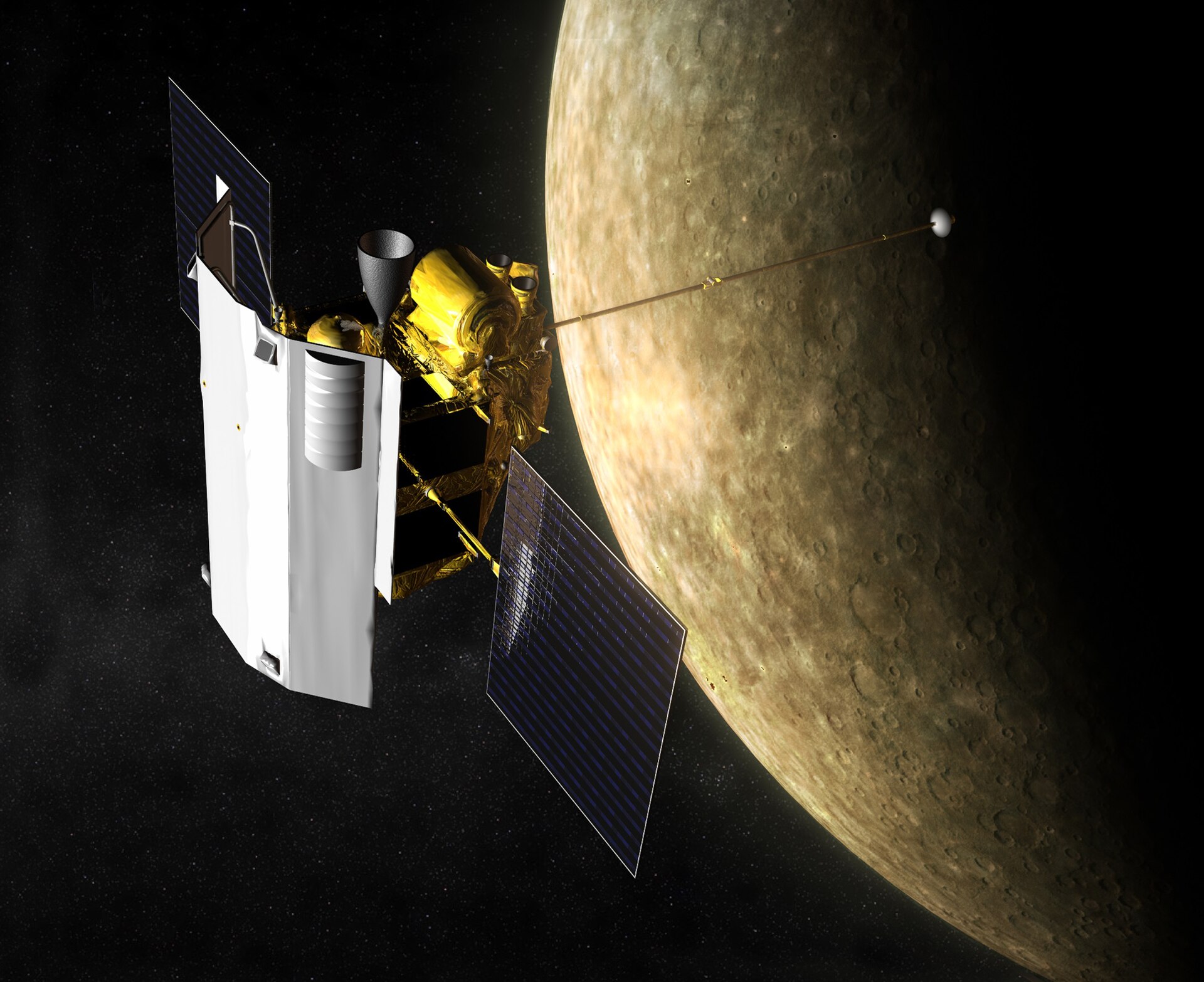
Mercury is the fast car. It is the closest planet to the Sun and takes just 88 days to orbit, compared with Earth’s 365. As Mercury swings around its tight orbit and passes between us and the Sun, our changing viewing angle makes it look like it is sliding backward against the stars for a few weeks.
How often it happens
Because Mercury’s year is so short, it laps Earth often. According to The Planetary Society, Mercury appears to move backward three or four times a year, for about three weeks at a time. The same article puts it simply: there is no scientific evidence that any planet’s apparent retrograde motion affects you at all.
It is not just Mercury
Every planet appears to go retrograde from Earth’s point of view. With the outer planets, like Mars, Jupiter and Saturn, the situation is flipped: Earth is the faster car, and they seem to drift backward as we overtake them. Mercury just gets the most attention because its retrogrades are frequent and astrologers link it to everyday things like phones and email.
What astrologers say Mercury retrograde means
In astrology, each planet “rules” certain areas of life. Mercury, named for the Roman messenger god, is linked with communication, thinking, technology, travel, paperwork and contracts. It is also the traditional ruler of Gemini and Virgo.
So when Mercury appears to move backward, astrologers say those areas can feel like they are moving backward too. The common list of retrograde “symptoms” includes:
- Miscommunications, misread texts and emails sent to the wrong person.
- Tech glitches, crashed apps and lost files.
- Travel delays, missed connections and lost luggage.
- Confusing contracts or plans that need to be redone.
- People from your past suddenly reappearing.
Astrologers do not usually frame it as purely bad, though. Many describe retrograde as a natural time for the “re-” words: review, revise, reflect, reconnect, reorganize and rest.
The “shadow” periods
Astrologers also talk about pre-shadow and post-shadow periods, the weeks just before and after the retrograde, when Mercury is moving through the same stretch of sky it will cover (or just covered) in reverse. These are described as a gentle warm-up and cool-down.
Does the sign matter?
In astrology, yes. Each retrograde happens in a particular zodiac sign, and astrologers interpret it through that sign’s element. A retrograde in a water sign might be read as emotional miscommunication, while one in an earth sign might be read as delays with money or work. Our guide to the zodiac elements explains those flavors.
Astronomy vs. astrology at a glance
| Astronomy | Astrology | |
|---|---|---|
| What it is | An apparent backward drift of Mercury against the stars | A period when Mercury’s themes feel reversed or scrambled |
| Cause | Earth and Mercury’s different orbital speeds and viewing angle | Symbolic meaning of Mercury’s apparent motion |
| Does Mercury really reverse? | No | Not literally, but the symbolism matters |
| Effect on people | No scientific evidence of any effect | Said to affect communication, tech and travel |
| Best response | Enjoy the night sky | Review, double-check, slow down |
Why Mercury retrograde feels so real
If there is no physical effect, why do so many people swear their life falls apart during retrograde? A few very human reasons help explain it.
- Things go wrong all the time. Phones crash and flights get delayed every week of the year. When you are expecting chaos, you notice it more.
- Confirmation bias. We remember the hits (“my laptop died during retrograde!”) and forget the misses (the smooth weeks we never think about).
- A handy explanation. Blaming a planet can feel lighter and funnier than blaming yourself or your coworker, which is part of the fun.
- It is often retrograde. With several periods a year, plus shadow weeks, a big chunk of the calendar is “near retrograde” by some definition.
If you are curious about how these mental shortcuts shape the way we read personality descriptions too, our article on whether online personality quizzes are accurate digs into it.
A practical Mercury retrograde survival guide
Here is the nice part. The classic retrograde advice is just good advice, any week of the year. Whether you believe in astrology or not, these habits will save you headaches.
- Back up your phone and laptop. Set automatic backups so a crash is an annoyance, not a disaster.
- Reread important messages before sending. Check the recipient, the tone and the attachments.
- Confirm travel details. Double-check times, gates and reservations the day before.
- Read contracts carefully. Ask questions and take an extra day if something is unclear.
- Finish old projects. Use the “re-” energy to complete the things you started.
- Reconnect on your terms. Reach out to an old friend you miss. And if an ex texts, you are allowed to leave them on read.
How astrology fans read their own chart during retrograde
Astrologers say retrograde hits differently depending on your birth chart. People with a Gemini or Virgo sun, moon or rising, the signs Mercury rules, are said to feel it most. If you want to know your Big Three, start with our guide to sun, moon and rising signs.
Some astrologers also suggest noting which area of your chart the retrograde falls in, such as relationships, career or home, and treating that area as the place to review and reflect. It is a little like a scheduled check-in, and plenty of people enjoy it for exactly that reason.
FAQ
Does Mercury actually move backward?
No. Mercury always orbits the Sun in the same direction. It only appears to move backward from Earth because of the two planets’ different speeds and positions.
How long does Mercury retrograde last?
Each retrograde lasts about three weeks, and it happens several times a year. Astrologers add shadow periods before and after, which stretch the “retrograde season” a bit longer.
Is it bad to start a relationship during Mercury retrograde?
Astrologers sometimes advise waiting on big commitments, but there is no evidence that retrograde dooms anything. A good relationship depends on the two people in it. For what actually matters, see our zodiac compatibility chart for fun, and real-world values for the rest.
Can you see Mercury retrograde in the sky?
Not easily. Mercury stays close to the Sun in our sky, and during retrograde it passes near the Sun’s direction, so it is usually lost in the glare. The best views of Mercury come at dusk or dawn at other times of its cycle.
Next time someone blames Mercury for a bad day, you can explain the cosmic highway it is really zooming down. Then go ahead and back up your phone anyway. It never hurts.