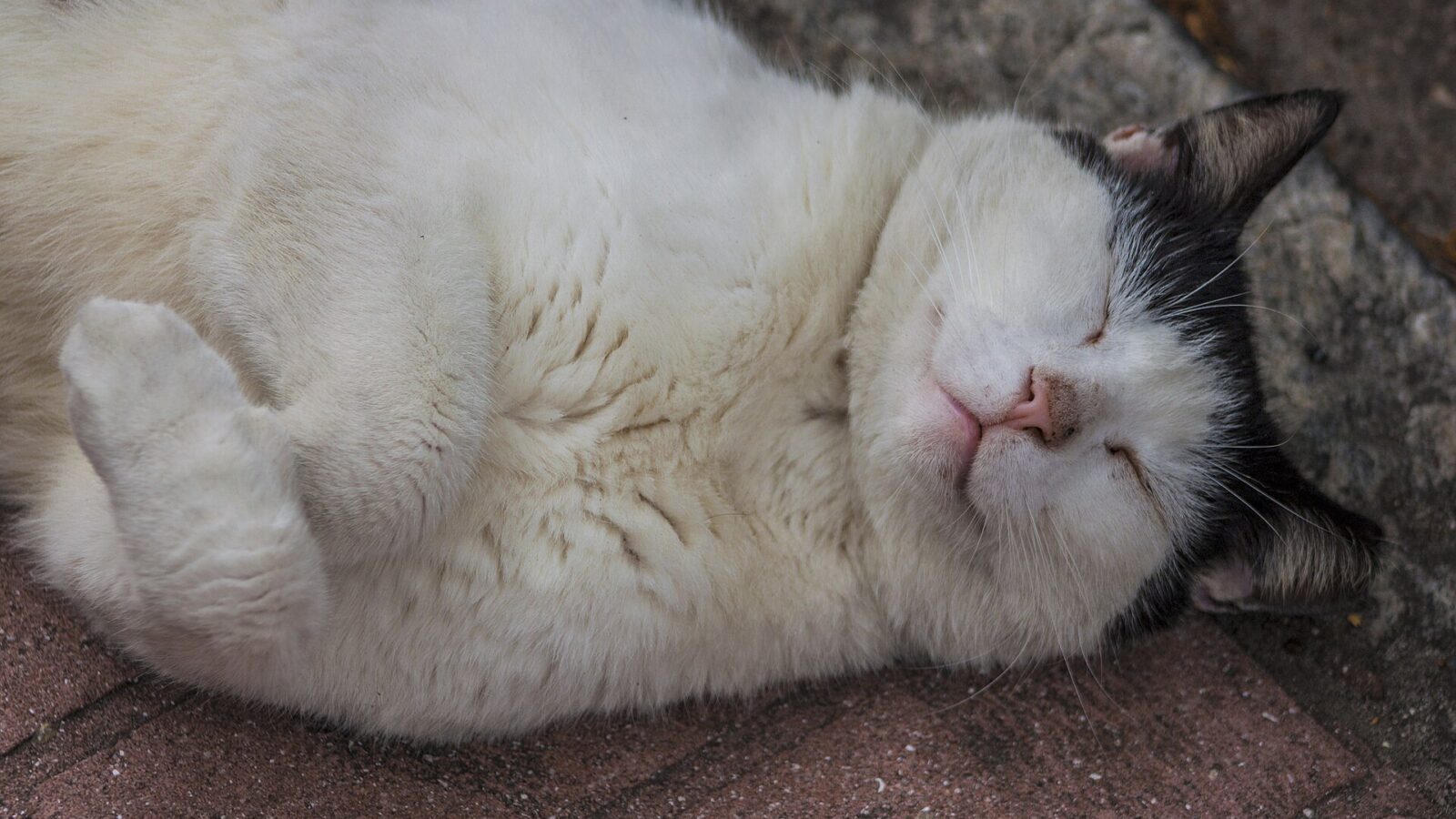
Dogs make happiness easy to read: the wagging, the wiggling, the full-body greeting at the door. Cats are subtler. A content cat might just be lying in a sunbeam with one paw tucked under, looking faintly unimpressed.
That doesn’t mean cats hide their feelings. They speak with their eyes, ears, tail, posture and daily routines. Once you know what to look for, learning how to tell if your cat is happy becomes surprisingly easy, and so does spotting the moment something changes.
Here are twelve reliable signs of a contented cat, five warning signs worth taking seriously, and a few simple ways to make a good life even better.
How to tell if your cat is happy: 12 signs
No single sign tells the whole story. Look for clusters: three or four of these together paint a much clearer picture than one alone.
1. A relaxed, loose body
A happy cat’s muscles look soft. It lies stretched out on its side, curls into a loose donut, or sits in the tidy “loaf” position with paws tucked under. A tense cat, by contrast, looks compact, crouched and ready to move.
2. Slow blinks and soft eyes
Half-closed eyes and a slow, deliberate blink are a friendly, relaxed signal. Staring wide-eyed can feel confrontational to cats, so a slow blink means the opposite. Try blinking slowly back and see if your cat returns the favor.
3. Tail held high
A tail pointing straight up as your cat trots toward you is a classic greeting. A slight hook at the tip, like a question mark, often signals a cheerful, curious mood. Low, tucked or thrashing tails tell a different story.
4. Purring in calm moments
Purring while curled on your lap or getting chin scratches is usually a sign of contentment. One caveat: cats sometimes purr when stressed, unwell or in pain too, possibly to soothe themselves. So read purring alongside body language and context.
5. Kneading
Rhythmic “making biscuits” on a blanket or your lap traces back to nursing as a kitten. It’s generally a comfort behavior. We break down the details in why cats knead and nine other strange cat behaviors.
6. Head-butts and cheek rubs
When your cat bonks its forehead into your hand or rubs its cheek along your leg, it’s sharing scent from glands on its face. That’s how cats mark friends and family. It’s one of the clearest signs your cat feels bonded to you.
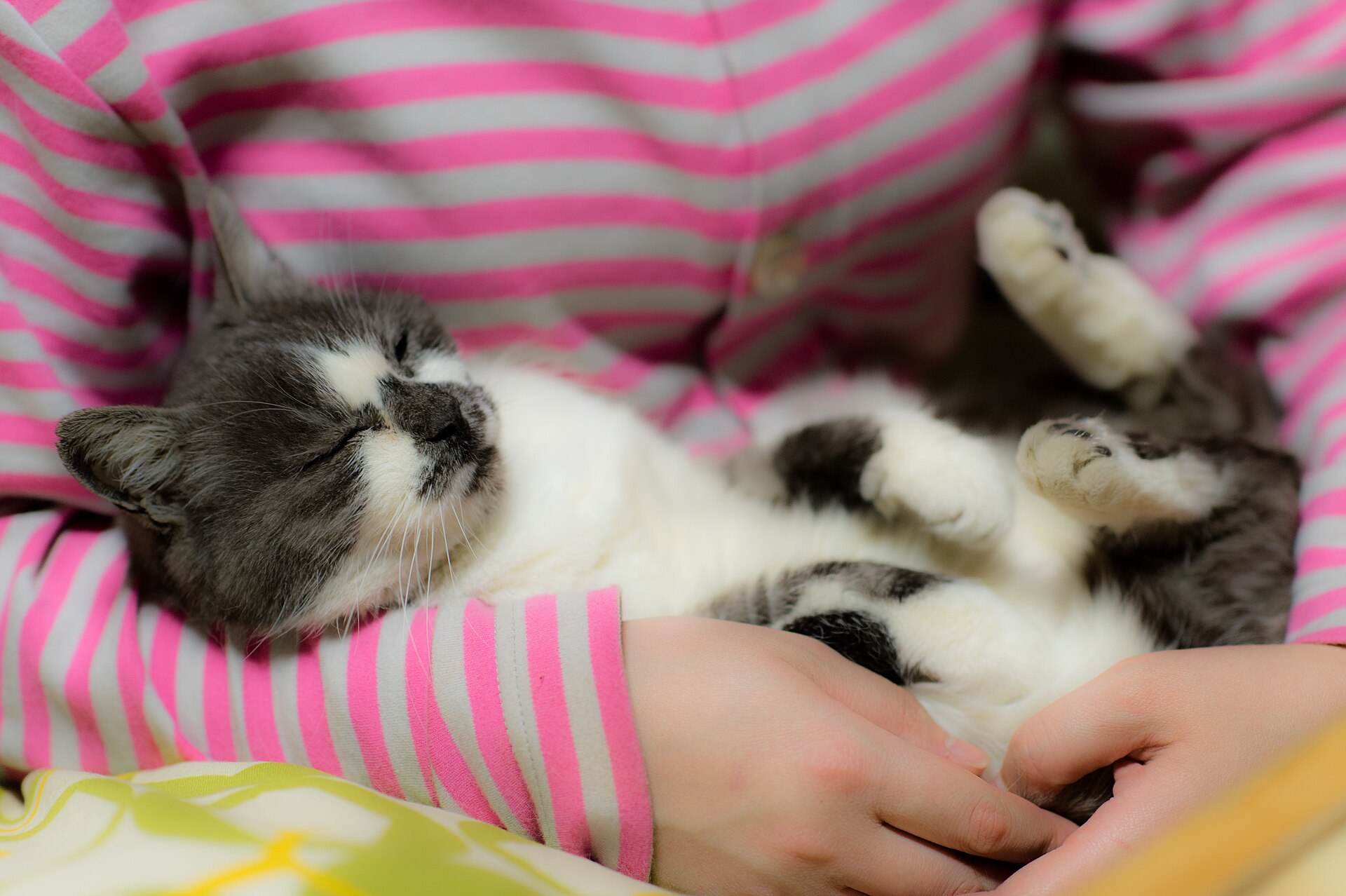
7. Sleeping belly-up or sprawled out
Cats are both predators and prey, so they protect their bellies. A cat that sleeps on its back in the middle of the living room feels deeply safe in its home. Admire it, but don’t assume it wants a belly rub.
8. Regular play
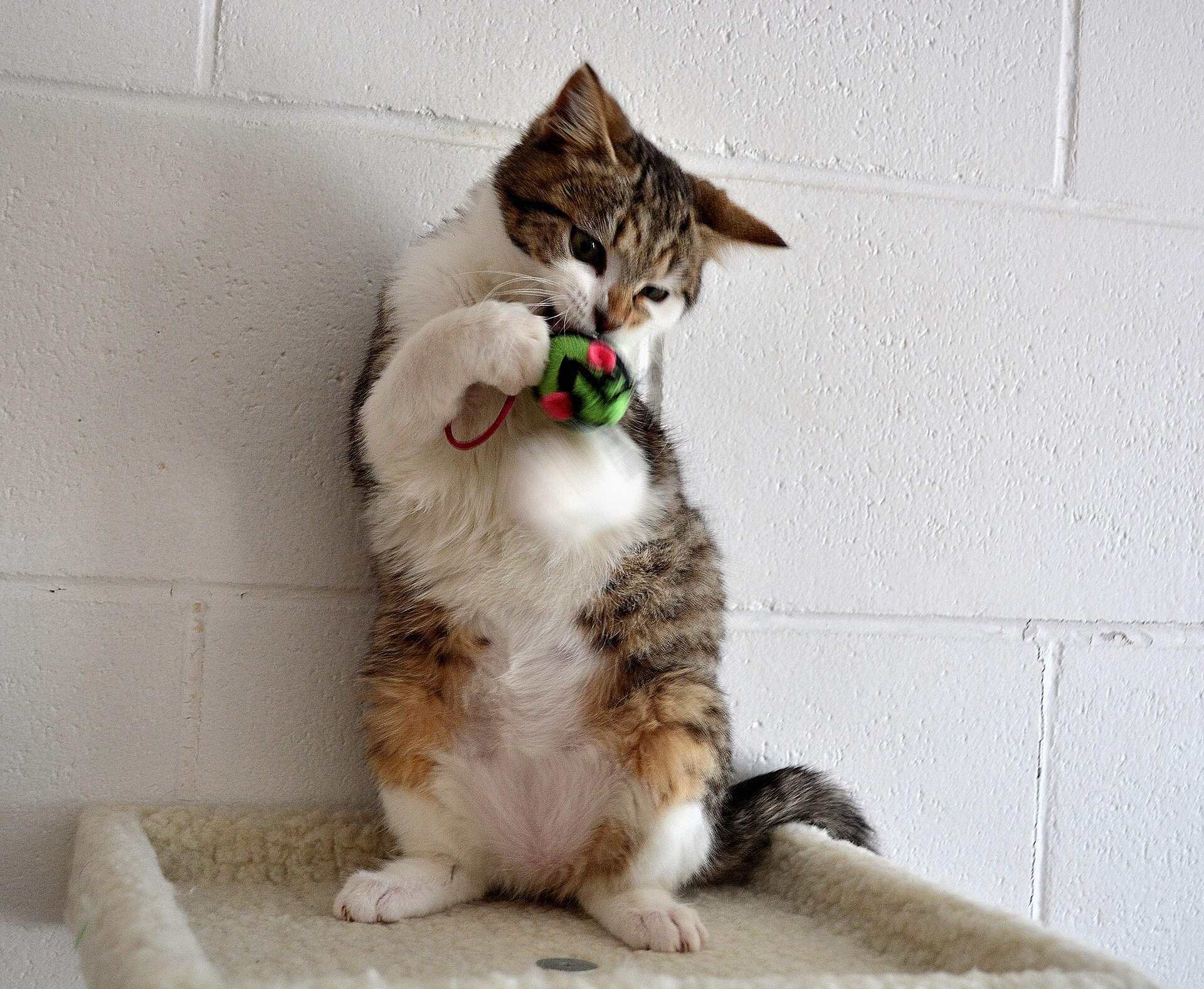
Chasing a wand toy, batting a bottle cap, or stalking your feet under the blanket are all good news. Play shows energy, curiosity and confidence. Even older cats usually enjoy short play sessions when the toy moves like prey.
9. A healthy, consistent appetite
A cat that shows up for meals on schedule and eats normally is generally feeling well. Appetite is one of the first things to change when a cat is stressed or sick, so knowing your cat’s normal is valuable.
10. Good grooming
A clean, smooth coat means your cat has the time, comfort and motivation to look after itself. Cats who live together and groom each other are also showing a friendly bond.
11. Chirps, trills and friendly chatter
Many cats greet their people with a short trill or a chirpy “mrrp.” These sounds tend to be social and upbeat. Every cat’s vocabulary is different, so learn your own cat’s happy sounds.
12. Choosing to be near you
Not every happy cat is a lap cat. Some show affection by sleeping at the foot of the bed, following you from room to room, or sitting a few feet away while you work. Being chosen, on the cat’s terms, is the sign that counts.
Happy vs. stressed: a body language cheat sheet
Use this quick table when you’re not sure what your cat’s mood is. Check several body parts at once rather than relying on just one.
| Body part | Happy and relaxed | Stressed or upset |
|---|---|---|
| Eyes | Soft, half-closed, slow blinks | Wide, dilated pupils, hard stare |
| Ears | Upright, facing forward, relaxed | Flattened sideways or back |
| Tail | High, gentle curve at the tip | Tucked, puffed, or lashing side to side |
| Whiskers | Relaxed, slightly to the side | Pulled back flat against the face |
| Posture | Stretched out, loaf, belly showing | Crouched low, hunched, arched back |
| Sounds | Trills, soft meows, calm purring | Hissing, growling, yowling |
| Behavior | Plays, eats, grooms, seeks company | Hides, avoids touch, swats |
5 warning signs your cat isn’t happy
Cats are experts at masking discomfort. That’s why changes in routine are often the earliest clue. These five deserve attention, and several can have a medical cause, so your veterinarian should be your first stop.
1. Hiding more than usual
A cat that suddenly spends its days under the bed may be stressed, scared or not feeling well. New pets, visitors, a move or loud renovations can trigger it. If there’s no obvious reason, or it lasts more than a day or two, call your vet.
2. Changes in eating or drinking
Skipping meals, eating much more, or drinking noticeably more water are all reasons to check in with a veterinarian. Don’t wait long with a cat that has stopped eating.
3. Litter box problems
Going outside the box, straining, or visiting much more often can be linked to stress, a dirty or poorly placed box, or a health issue. A cat that strains with little or nothing coming out needs urgent veterinary care. The ASPCA’s overview of common cat behavior issues covers litter box problems in more depth.
4. Over-grooming or a messy coat
Licking one area until the fur thins can be tied to stress, allergies or skin problems. The opposite, a greasy or matted coat, can mean a cat feels too unwell or sore to groom. Both are worth a vet visit.
5. New irritability or aggression
A gentle cat that starts hissing, swatting or biting when touched may be in pain. It may also be frustrated by a change at home, like a new cat it can see through the window. Rule out health issues first, then look at the environment.
Simple ways to make your cat happier
Most cats don’t need fancy gadgets. They need a home that lets them act like cats: climbing, hiding, hunting, scratching and napping in warm spots.
- Play daily. Two short wand-toy sessions, ending with a “catch,” satisfy the hunting drive.
- Go vertical. Shelves, cat trees and window perches let cats survey their territory.
- Offer hideouts. A box or covered bed in a quiet corner is a cheap confidence boost.
- Keep the litter box clean. Scoop daily and keep it in a calm, easy-to-reach spot.
- Respect consent. Let your cat approach you, and stop petting when the tail starts flicking.
- Stick to routines. Regular meal and play times help cats feel secure.
Living in a small space? Our guide to the best pets for apartment living includes ideas for giving cats enough territory without more square footage.
Every cat shows happiness differently
A bold, social cat might greet every guest and flop over in the hallway. A shy cat might only show its happiest side when the house is quiet. Both can be equally content.
Knowing your cat’s personality helps you read its baseline. Our guide to the five cat personality types can help you figure out whether you live with a social butterfly, a cautious observer or something in between.
Curious about how animals reflect our own personalities? Our piece on spirit animal meaning explores where that idea comes from and how to use it respectfully.
FAQ
Does purring always mean a cat is happy?
No. Purring often signals contentment, but cats can also purr when they’re stressed, hurt or unwell. Look at the rest of the body: relaxed posture and soft eyes point to happy purring.
Can an indoor cat be truly happy?
Yes. Indoor cats can live full, happy lives when they get daily play, climbing spaces, hiding spots and window views. Enrichment matters more than square footage.
Why does my happy cat suddenly bite during petting?
Many cats get overstimulated after a while. Watch for early signals like a twitching tail, rippling skin or ears turning sideways, and stop before the bite. If the biting is new or intense, ask your vet to rule out pain.
Is my cat sad if it sleeps all day?
Not necessarily. Cats naturally sleep a large part of the day. What matters is whether your cat is also alert, eating and playing during its awake time. A sudden jump in sleep or lethargy is worth a vet check.
Your cat may never wag its tail or jump into your arms, but it is constantly telling you how it feels. Learn its relaxed baseline, watch for clusters of happy signs, and treat any sudden change as a message worth answering. That attention is one of the kindest things you can give a cat.